


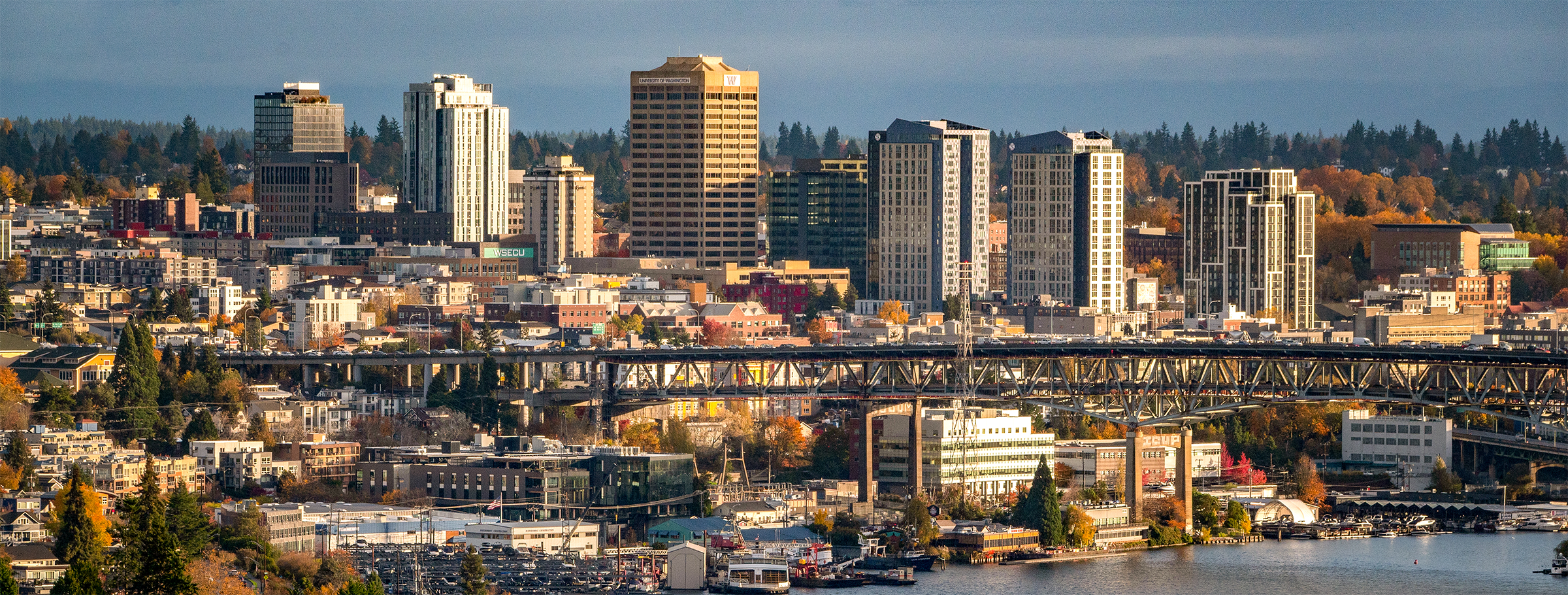
Seattle’s University District—the U District—is one of the city’s most economically active neighborhoods. Designated a Regional Center in the 2025 Seattle Comprehensive Plan, the U District is poised for rapid residential growth over the next twenty years. This builds on an already dynamic economy, fueled by transit access, a robust commercial sector, the University of Washington as a major economic engine, and ongoing real estate development.
The U District’s multifaceted economy is reflected in a variety of indicators and captured in the 2026 U District Economic Report, highlighting the neighborhood’s vitality and its long-standing role as the commercial hub of North Seattle.
For questions or to learn more about the U District economy, contact Hannah Kiburz, Economic Development Manager, at hannah@udistrictpartnership.org.
A Neighborhood Attracting Record Visitors
The U District welcomed 37.4 million visits in 2025 — a 17.2% increase compared to pre-pandemic 2019 levels, and the third consecutive year that annual visits have exceeded the 2019 benchmark. The neighborhood draws tens of thousands of people daily, anchored by the University of Washington’s academic calendar and a year-round mix of cultural institutions, small businesses, and major events. The U District Street Fair, UW graduation, cherry blossom season, and fall move-in week consistently rank as the neighborhood’s highest-traffic periods for people who do not live or work in the neighborhood.
A Growing, Gen Z-Centered Residential Community
Home to 38,298 residents, the U District’s population has grown 47% since 2010 — outpacing both the City of Seattle (34%) and King County (25%) over the same period. The neighborhood’s residential base is notably young: 78% of residents are between the ages of 15 and 29, reflecting the presence of University of Washington students alongside young professionals drawn to the neighborhood’s walkability and urban amenities. With more than 16,300 housing units — a 27% increase from 2020 to 2025 — the neighborhood continues to accommodate this growth.
560+ Businesses and a Thriving Commercial Core
The U District is home to more than 560 businesses, approximately 60% of which occupy ground floor spaces, animating the neighborhood’s streets and sidewalks. More than 170 food and beverage establishments represent cuisines from over 20 cultures, reflecting the neighborhood’s diversity and appeal as a dining destination. The U District welcomed 17 new ground floor businesses in 2025, with more than six additional openings already recorded in early 2026 and four more announced for later this year.
A standout feature of the U District’s commercial identity is its thriving vintage, thrift, and nostalgia retail scene; with more than 20 shops offering secondhand clothing, vinyl records, used books, videos and video games, and collectibles. This retail cluster taps into growing consumer interest in sustainability and individuality, and has become a draw in its own right.
Unprecedented Real Estate Investment
In large part due to the City of Seattle’s 2017 upzone, the U District has experienced a wave of transformative development. This 2026 report documents 58 development projects completed since 2017, six projects currently under construction, and 29 additional projects announced. The City of Seattle’s 2025 Comprehensive Plan designates the U District as a Regional Center and projects the neighborhood will add at least 4,000 new housing units and 3,500 new jobs over the next 20 years, a reflection of the neighborhood’s central role in Seattle’s long-term economic future.
One of Seattle’s Most Connected Neighborhoods
The U District’s mobility infrastructure sets it apart. Walk, Transit, and Bike Scores for the neighborhood — and particularly for University Way NE (“the Ave”) — exceed Seattle’s citywide averages across all three measures. Two light rail stations anchor the neighborhood: the U District Station, which opened in 2021 and ranks fourth in the Sound Transit network for total boardings, and the UW Station, which ranks sixth. Together, they provide rapid regional connectivity from Lynnwood and Bothell in the north to Federal Way in the south, with a planned 2026 extension to Redmond and Bellevue.
Shared micromobility is also surging: 10.13% of all Seattle Lime rides start or stop in the U District, and the number of Lime rides in the neighborhood increased 112% between 2024 and 2025.
What People Are Saying
Councilmember Maritza Rivera, District 4, City of Seattle
“The U District is a vibrant neighborhood with a large transit hub, growing cultural activities, and a world class university at its center. I’m excited to see its economy doing so well. This neighborhood is an energetic, thriving destination with a diversity of businesses and restaurants and events and festivals, from cherry blossoms to Boba Fest and so much in between. I’m proud of the investments I’ve brought to the U District and look forward to the continued economic growth and vibrancy of this special neighborhood.”
Mayor Katie Wilson, City of Seattle
“This report highlights exactly what makes the U District what it is: its unique mix of people, a strong commercial corridor in ‘the Ave,’ a hub for innovation, and vibrant pedestrian activity. It’s one of Seattle’s fastest-growing and most dynamic areas.
Aaron Hoard, Director of Regional & Community Relations for the University of Washington
“The U District is one of Seattle’s most vibrant neighborhoods, and the University of Washington is proud to be a committed partner in shaping its future. The road ahead is promising — we are a place where world-class research meets vibrant street life, where students and longtime residents thrive side by side, and where the innovation happening on our campus spills out into every block. The growth we’re seeing here isn’t just development — it’s an opportunity to build something that reflects our shared values of equity, sustainability, and opportunity.”
Gavin Amos, Co-Owner of Avole Coffee
“Opening in the U District was about more than finding the right space. It was about finding the right community. There’s energy, curiosity, and a strong student presence, but also a real neighborhood identity that felt right for what Avole is trying to build. The diversity of this community, and the way it embraces businesses rooted in culture and tradition, made it clear this was where we needed to be — a place where people feel naturally drawn to gather and build community.”
Kara Stone, General Manager of Seattle Bouldering Project
“The U District was a natural choice for our expansion. With our U District location, we saw a chance to serve new members and cultivate future climbers in what is arguably our most visible site, benefiting from high pedestrian and vehicular traffic, easy access to light rail, and adjacency to the UW. That connectivity allows us to truly welcome people to the sport, connecting with the community and providing that essential ‘third place’ in their lives.”
Kris Lewis, John S. Behnke Director, The Henry Art Gallery
“The Henry is proud to be part of the U District’s remarkable growth. Since moving to free admission in May, we’ve seen a 50% increase in attendance, opening our doors wider to students, families, and visitors from across the region. We’re also seeing an uptick in tourism, as more people discover the neighborhood as a cultural destination. As the U District continues to evolve, the Henry remains committed to being an accessible, welcoming space for contemporary art and community connection.”
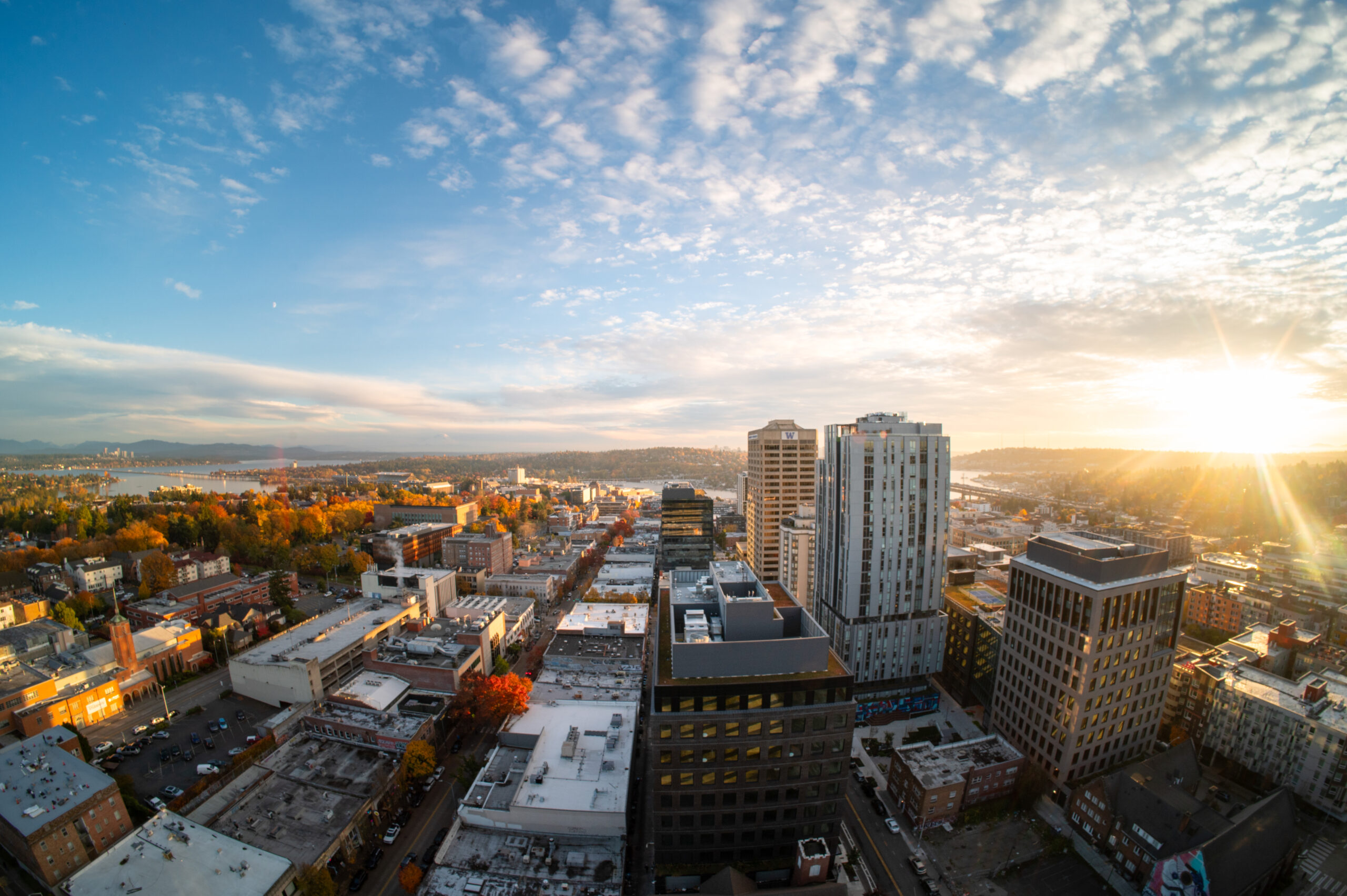
Photo by Thread Theory for The U District Partnership, 2025